Here's Why I'm Finally Coming Off It
Part 1: The Lexapro Backstory
Anxiety, Diagnosis, and the Drug That Helped Me Survive
⚠️ Content Warning: This post references suicidal ideation and sexual side effects of medication.
Please read with care if you are in a vulnerable place.
If you are in crisis, please reach out to the Suicide & Crisis Lifeline.
I’ve always led with my story. My cancer journey, my relationship with fitness, the messy middle of survivorship… all of it. So it shouldn’t surprise anyone that the next chapter I’m sharing is this one:
After 5 years on Lexapro, I’m ready to come off it, and I’m bringing you along for every step.
Before I get into where I am now, you need to understand where I started, because this story doesn’t begin with a prescription. It begins long before cancer ever entered my vocabulary.
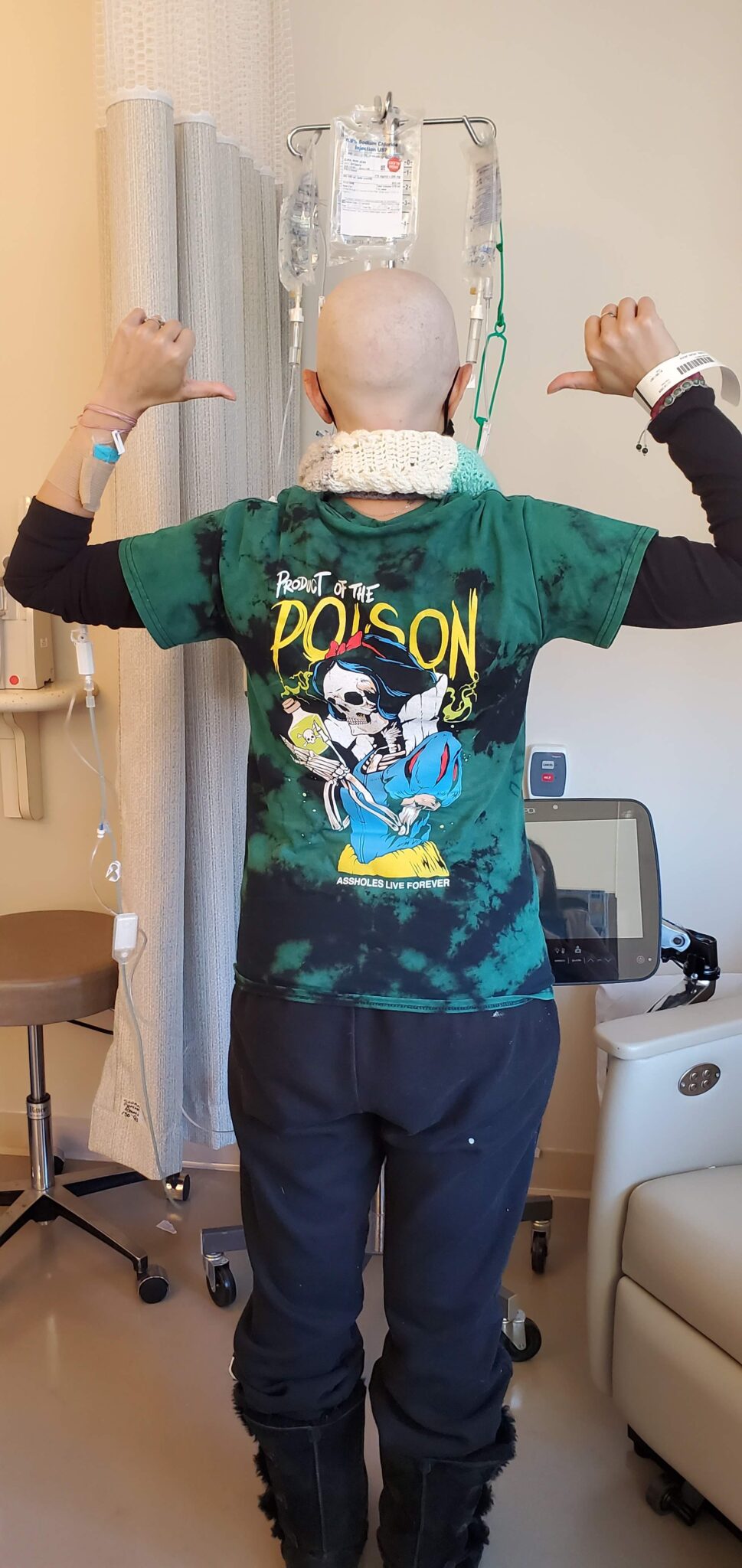
The Rori BC (Before Cancer): Anxiety, Medication Sensitivity, and Learning to Cope the Hard Way
I always struggled with some sort of anxiety, but I was never someone who did well with medications. When I was younger, my gyno tried putting me on birth control, and even on a low, low dose, I would have very scary thoughts.
At one point, I found myself texting my now-husband while standing on the train platform to the Long Island Railroad, wondering what it would be like to touch the third rail. He immediately responded: “I’m throwing out your birth control.”
That was the moment we both understood something important: my nervous system doesn’t respond to medication the way most people’s do. This knowledge would come back to matter more than I could have imagined…
The Rori BC would use exercise as a means to deal with stress, though not always in a healthy way. I was trying to make myself as skinny as I could. I’d been a dancer for a nightclub in college and was let go for being “too big,” and I guess that’s always stuck with me… rightfully so.
Exercise was my outlet, but it was tangled up with a lot of complicated feelings about my body.
Then 2020 Hit... And Everything Shattered
The world we knew shattered from the inside out. I lost a corporate job that I loved due to the pandemic, and then was immediately diagnosed with triple-negative breast cancer at just 33 years old. Triple negative breast cancer (TNBC) is one of the most aggressive subtypes.
It doesn’t respond to hormone therapy or targeted treatments, which means chemotherapy, surgery, and maybe radiation become the primary weapons. I thought I could handle the mental load of appointments, scans, chemo, surgeries, losing my hair, losing and gaining weight, and everything else that came with it. And I did… for a while.
When I got the call after my double mastectomy that I’d have to go in for another surgery to remove the rest of my lymph nodes due to micromets being found, I officially hit my breaking point.
The Breaking Point, When I Finally Said "I Need Help"
That was the moment I knew I needed help, mentally. I started speaking with a social worker every week, and we started on a “baby” dose of an SSRI called Zoloft.
I was so unbelievably hesitant to take it, because I knew this was something you would most likely be on for life. The brain is not something to f*ck with.
I hated it. I called my nurse’s line after a few days, wanting to come off of it. I felt like my head was in the clouds. I couldn’t think; everything was foggy, and I was just a shell of a being. I argued that if this is how SSRIs make me feel, I’ll just deal with things without meds.
My nurse said that different drugs impact people in different ways, and that some people do better on a medication called Lexapro (escitalopram). I said I would try it, but if it didn’t work, that was it.
Well… it worked.
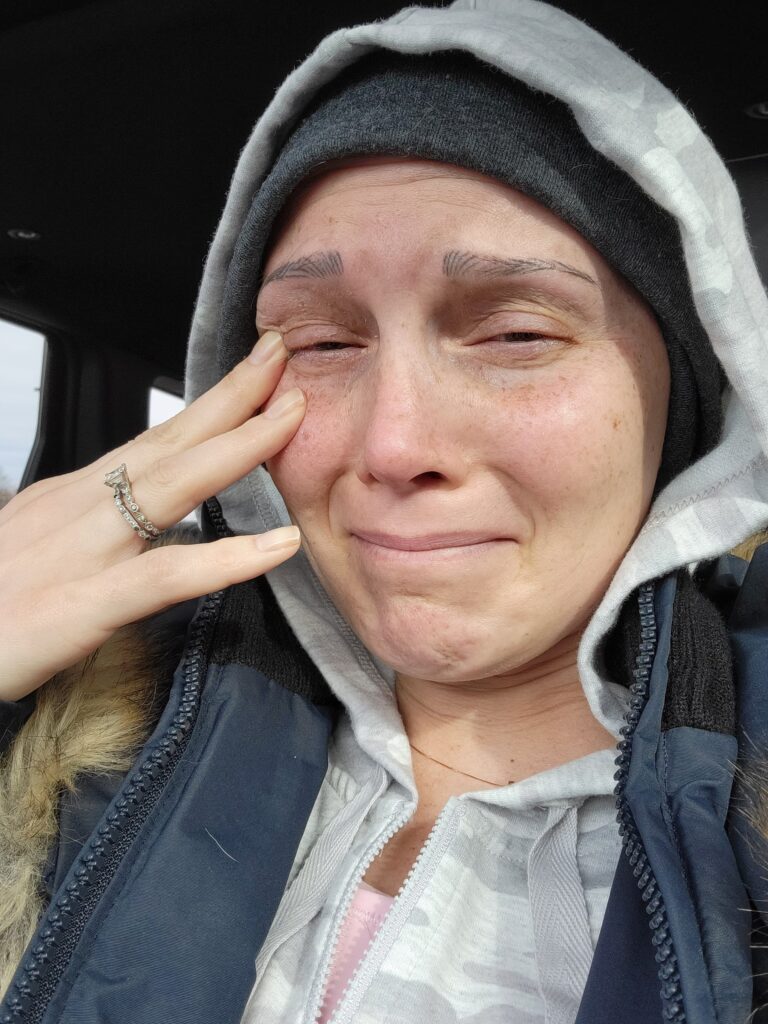
Lexapro Changed Things, But Nothing Comes Without a Price
It even helped with my hot flashes somewhat, but more importantly, I felt calmer. I could handle my emotions a lot better and found that I wasn’t crying all the time anymore. Of course, nothing comes without a price.
The side effects were real, and since I knew what life was like off this medication, I made the conscious decision to deal with them for the time being. I would find myself in periods of insomnia, gained a good amount of weight, and then there was the sexual aspect, which was probably the most impactful. Despite being in and out of medically induced menopause, it was like the orgasm switch was turned off. If I did end up having an orgasm, it was dulled and made me feel like I didn’t completely achieve a release.
I want to say that out loud because no one talks about it. Sexual side effects from SSRIs, especially on top of what breast cancer treatment already does to your hormones and your body… are real, significant, and deserve to be part of the conversation.
Even with the side effects, though, the medication was helping me.
I just didn’t want to be on it for the rest of my life.
I didn’t want the crutch and the link to this part of my life forever.
I stayed on it for 5 years… For 5 years, I dealt with the side effects. For 5 years, I worked with different mental health therapists.
Finally, I can confidently say that I’ve put in the work and am ready to start my life without this drug.
The Rori AD (After Diagnosis): Researching My Way to the Right Answer
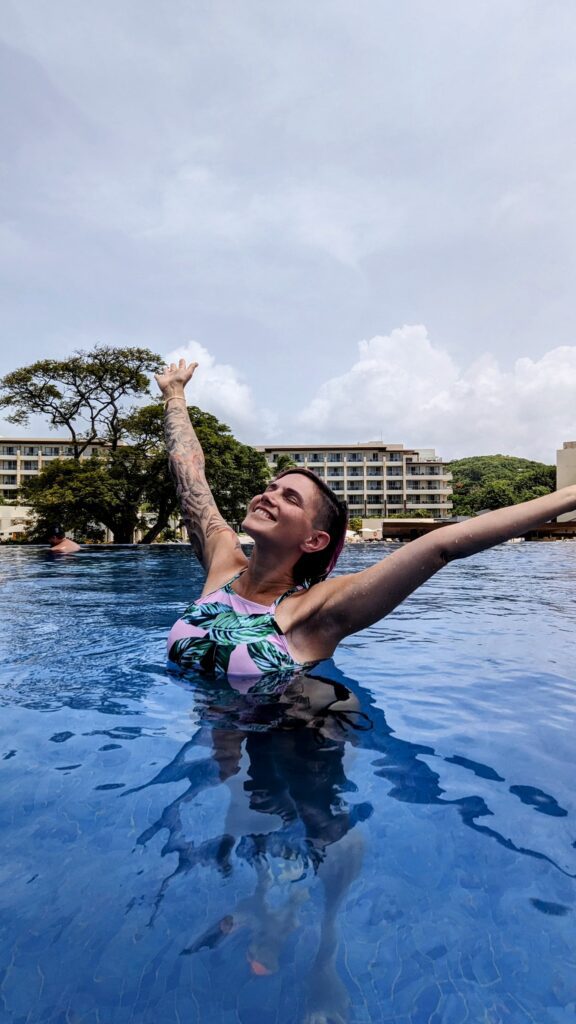
The Rori AD no longer does things willy-nilly. I research and question the ever-living sh*t out of everything, especially when it comes to my health. So, of course, coming off Lexapro was no exception.
Reading everything online about SSRI withdrawal was scary AF. References to it feeling like heroin withdrawal, stories of doctors having no idea how to help their patients, and people being left completely on their own.
Naturally, I went to my primary doctor, who had been taking over prescribing my medication from my oncology team, and asked her about coming off Lexapro safely.
Her answer? “Just cut the pill in half, or take it every other day.”
My gut told me this was absolutely NOT the right approach. The one time I forgot to take my medication for a few days while I was sick, I almost went blind, became so dizzy and foggy that I was scared I’d end up in the hospital.
That’s called SSRI discontinuation syndrome… and it’s very real.
So I did what any determined patient-advocate does: I went to Reddit… and the community did not disappoint!
I must have read hundreds of different posts with people experiencing vastly different tapering experiences. Some were just as bad as I had feared. But some… some were actually positive.
Those positive posts eventually led me to a Facebook group called Lexapro: Support, Withdrawal, Recovery. When I made my introductory post, a fellow member commented with a link to a website that became incredibly helpful: Surviving Antidepressants, a peer support community with in-depth, evidence-informed guidance on tapering psychiatric medications.
From there, I eventually found a company called Outro.
Finding Outro & The Missing Link in Our Healthcare System
Outro pairs patients with a clinician to build an evidence-based plan to safely reduce SSRI medication, with support at each and every step. This is the missing link that our current healthcare system has failed to provide.
At first, I was skeptical. Was this a gimmick? Clickbait? But I said “f*ck it” and booked my consultation call. I went through their website with a fine-tooth comb, and everything they had listed there logistically made sense to me.
Why aren’t doctors already doing something like this??
I met with my clinician and spent 45 minutes talking through my medical history, my wants and needs, and exactly how they’d work with me to achieve the goals we set together.
Here’s something critical she told me: because I’ve been on a “baby” dose for the entire 5 years, this is actually the hardest dosage to come off of. At low doses, the brain’s receptor sensitivity is at its highest, which is exactly why my primary’s “just cut it in half” advice was so dangerous. It’s also why Outro uses a method called hyperbolic tapering, which has been shown to have a significantly higher success rate compared to standard tapering protocols.
After our consultation, I felt something I hadn’t expected to feel: confident. We were going to go at my pace, at my comfort level, with support groups, symptom monitoring, and check-ins throughout the entire duration of my program.
What Comes Next
Soon, my program will commence, and I’ll embark on this new chapter of “raw dogging” life.
Although I’m confident that I can do this, I’m also nervous, scared, and anxious… the irony is not lost on me.
We’ll be using a compounding pharmacy to ensure the exact dosage I need is delivered to me in a pill form, rather than using a liquid with a syringe.
This way, I can be sure I won’t introduce human error into my daily dosing. Consistency is everything when your nervous system is as sensitive as mine.
Why I'm Sharing This
I share all of this not because I need you to know my business, but because I know I’m not alone in this.
Somewhere out there is another breast cancer survivor, or honestly, any person, who’s been white-knuckling their way through side effects they were never warned about, too scared to come off a medication because their doctor shrugged and said, “just cut it in half.”
You deserve better than that. We all do.
This blog series is going to document every step of my taper journey… the good, the bad, the ugly, and hopefully, eventually, the free. I’ll be sharing what I learn, how my body responds, and how fitness plays a role in keeping me grounded throughout this process.
Because here’s what I know after everything cancer put me through: I am the CEO of my body. Not my oncologist, not my primary care doctor, not a pharmaceutical company. Me.
And this CEO is finally ready to close this chapter.
Follow along. Part 2 is coming soon… and so is the new version of me.